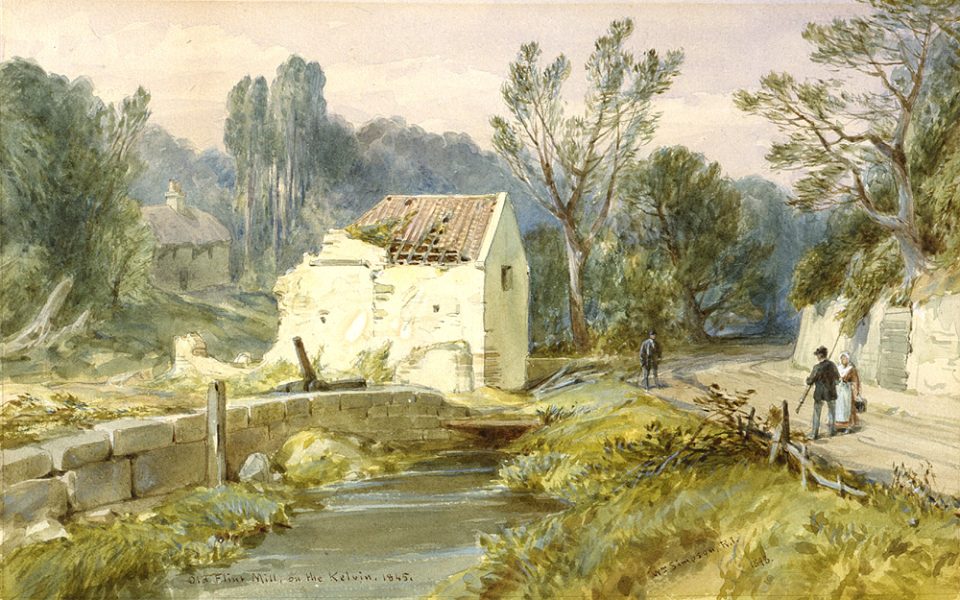
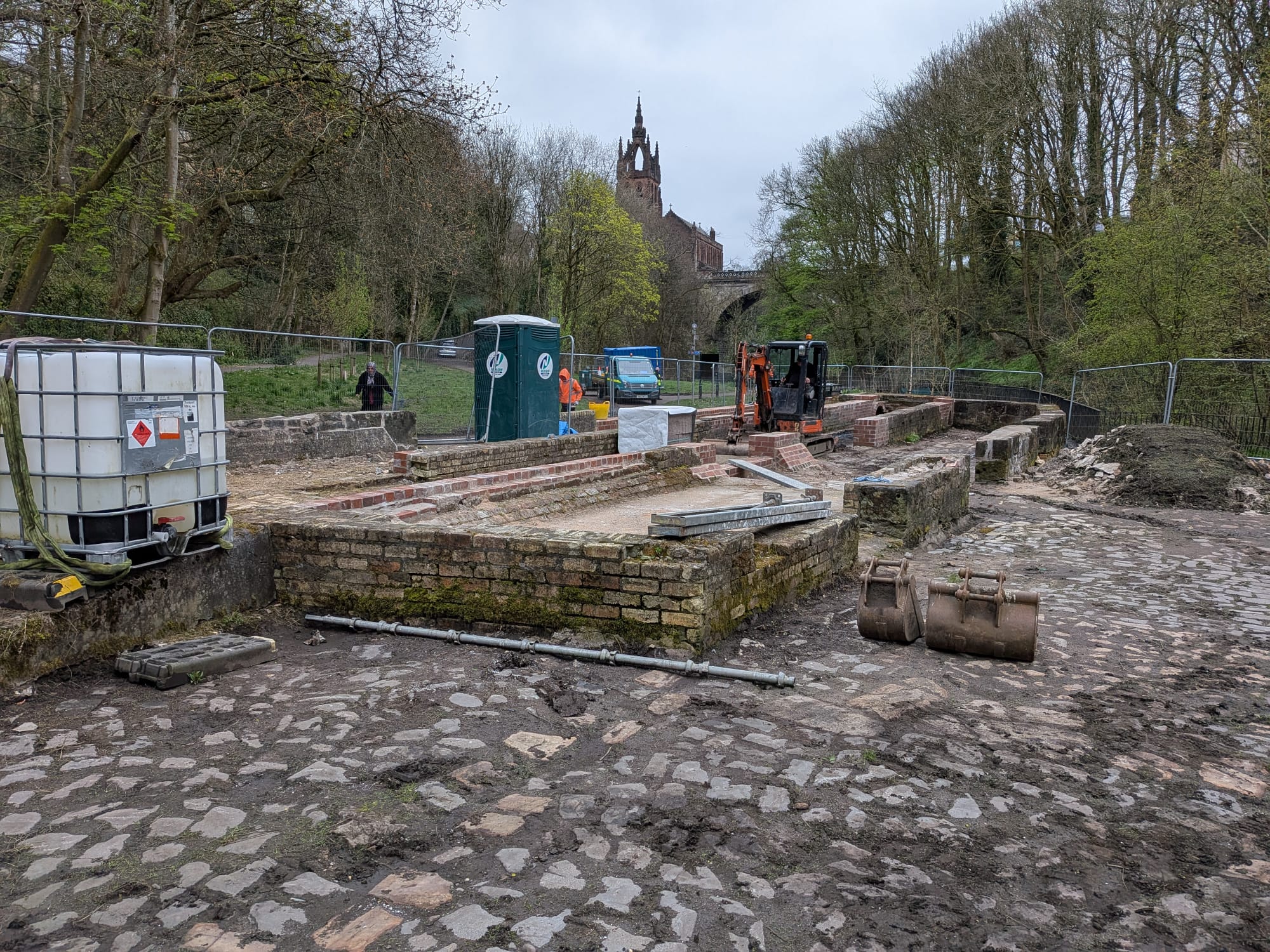
Last year, the Friends of Glasgow Botanics were successful in supporting Glasgow City Council gain Scheduled Monuments Consent to carry out physical works to consolidate and repair the remains of the former North Woodside Flint Mill Lade on the River Kelvin.
The Friends contributed £3k to meet the costs of initial assessments which in turn allowed GGC to unlock further funding to undertake the remaining work.
The Mill is likely to have started its life as a Barley Mill and it ended up as a Flint Mill for the ceramics industry in Scottish Potteries with quarried flint being ground down into slurry for ceramic production likely transported by barge or boat on the River.
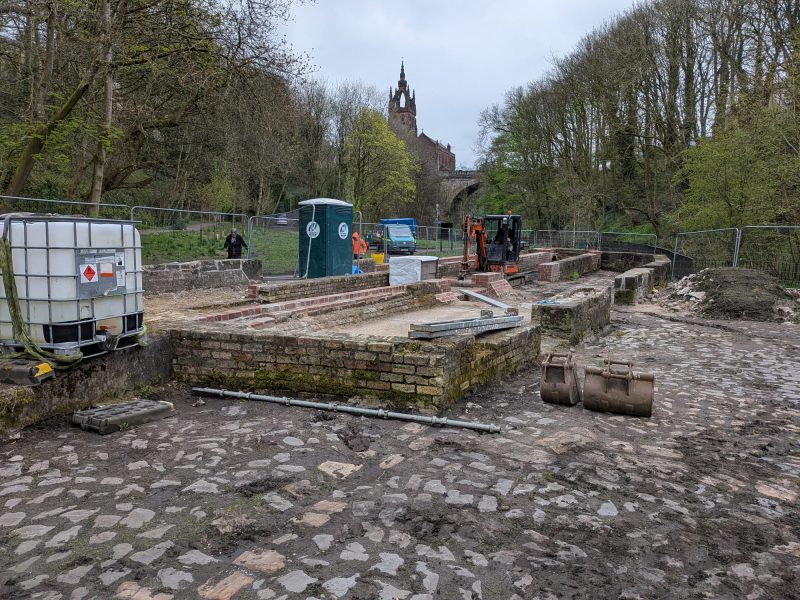
River water was directed along the Lade from the Weir to drive a large water mill and grinding stones that broke up flint stones. This material was then kiln heated and dried to form powder used in ceramics.
The site has had a varied history over the years and a town map dated 1795 shows 3 mill buildings in the area.
The Mill, Lade and the weir across the River Kelvin are all parts of an important industrial archaeology and the longer-term aim is to protect and enhance this heritage.