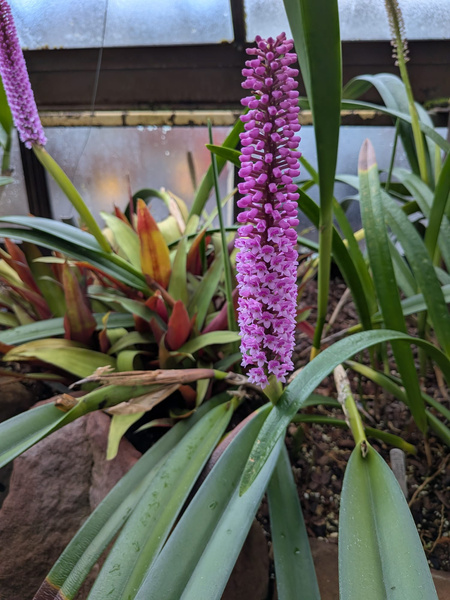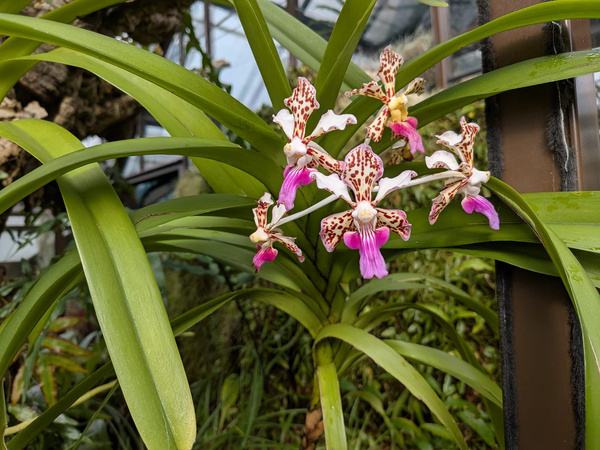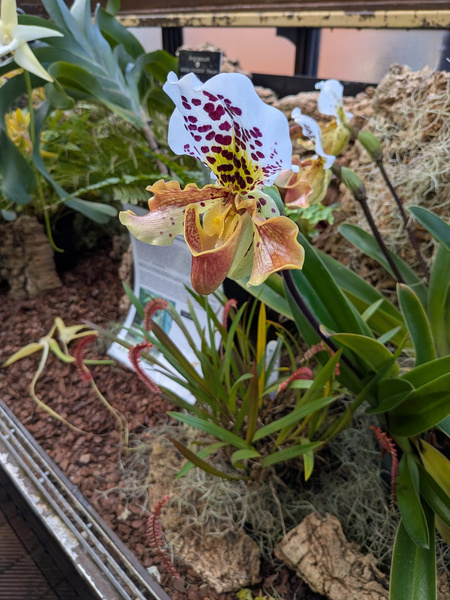
The Glasgow Botanic Gardens is renowned for its collection of dendrobium orchids and a group of Friends were fortunate enough to be given a guided tour of the orchid collection by Christine Nicholson.
Christine is the head of orchid propagation and she was able to give us a glimpse into the magical world of orchids that are to be found in Glasgow’s hothouses. Orchids are the largest family of flowering plants with at least 22000 species worldwide.
In the UK there are about 50 native species and in Scotland around 20 to 25. The first species that she showed us was vanilla, which I certainly didn’t realise was an orchid. As we found out during the tour, many orchids can be fussy and can only be pollinated by one specific insect, bird or bat. When vanilla was transported from Mexico to Mauritius as a commercial crop it failed to produce seed pods because it lacked the correct pollinating insect. A twelve year old slave boy, Edmund Albius, discovered how to pollinate vanilla by hand, as it is still done today. Albius died in poverty.
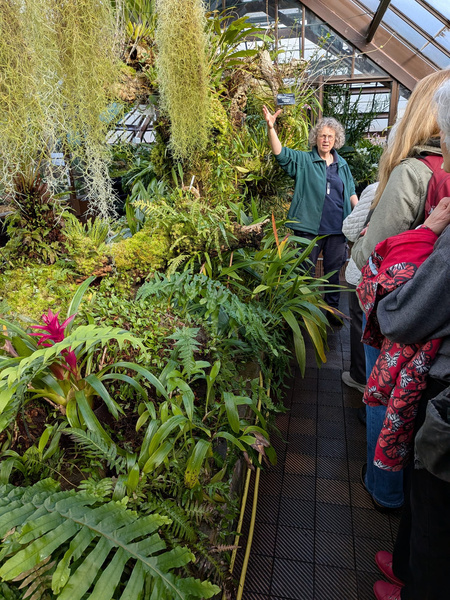
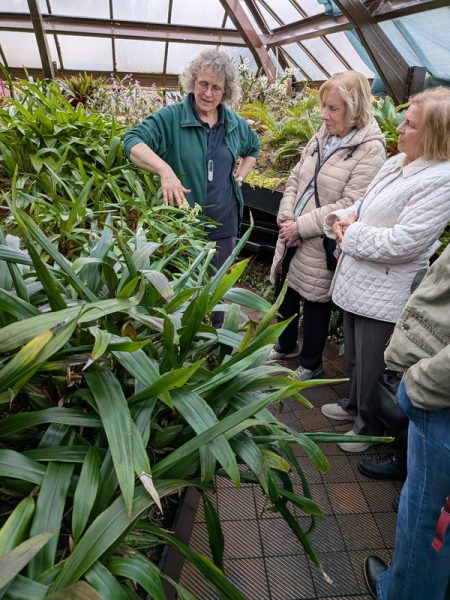
Walking through the orchid house it was astonishing to see the variety in size, shape, colour and form. Christine explained that unique structure of the orchid flower and that many are epiphytes attached to trees, or lithophytes,
growing in, on or among rocks. Make sure when you visit you don’t forget to look up.
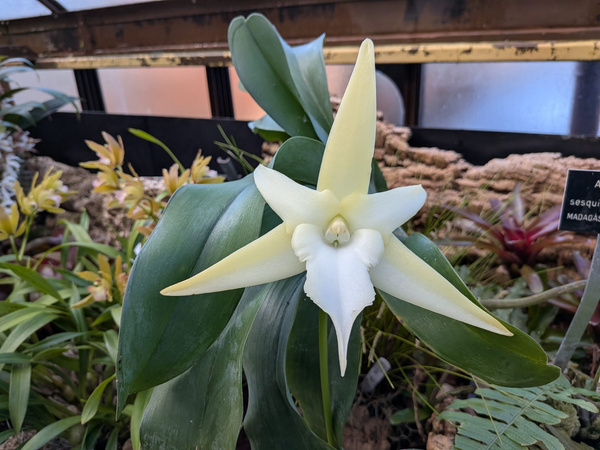
The March newsletter gave an article and link to the fascinating Darwin’s orchid and it was a treat to see this in flower.
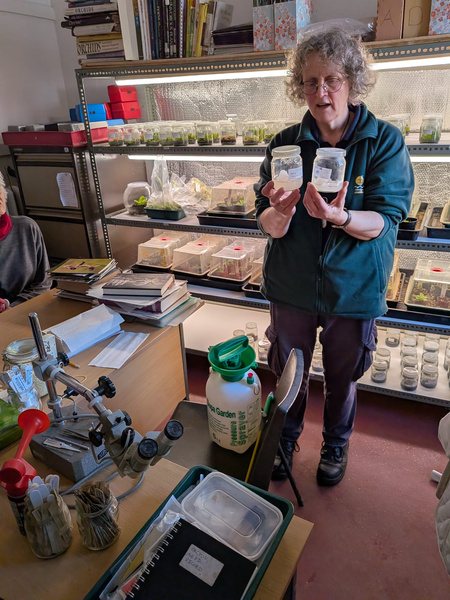
Perhaps the most interesting part of a special tour like this is to get a glimpse behind the scenes. We were shown into the glasses houses and laboratories where the magic really happens. The packed shelves of orchids need constant
care, controlling light, temperature, humidity and pests. In the laboratory the extremely tricky process of growing from seed could be observed. Orchid seed is fine as dust and the seed has no endosperm to provide food for the growing seedling. In the wild they rely on mycorrhizal fungi for sustenance, to grow them in the lab they are transferred using a pipette on to an agar gel.
Everything has to done under hospital type sterile atmosphere conditions. I think we were somewhat surprised that the details of each cross pollination
was kept in a series of old Strathclyde council jotters!
Altogether a fabulous tour and many thanks to Christine and staff for their amazing work.