‘Walking to be offered on prescription’ says the government. What better place to do it than the Arboretum? This area of the Botanics started to take shape in the 1970s, one hundred and thirty years after the inauguration of the Royal Botanic Gardens in the west end. Now where would we be without it? To walk through the undulating paths surrounded by massive trees alongside a healthy river must be as near to being in the countryside as is possible in the heart of the city.
During the ‘80s and ‘90s the adjacent River Kelvin underwent a cleanup, reversing the damage of hundreds of years of pollution caused by mills, gasworks, human waste. But now happily the river is a home to much wildlife. Salmon returned in the 1990s. You are now more likely to be deafened by a blackcap singing than by sounds of human labour, unless it is a leaf-blowing machine.
Trees planted only 50 years ago tower overhead. There are Scots pine (Pinus sylvestris), Black pine (Pinus nigra), Hemlocks (Tsuga heterophylla and Tsuga canadensis), magnificent Sequoias, like the Coast Redwood (Sequoia sempervirens) and the Giant Redwood (Sequoia giganteum) with their soft fibrous red bark and a Dawn Redwood (Metasequoia glyptostroboides) which was planted to mark the grand opening in 1977.
Three redwoods – three red barks. But which is which?
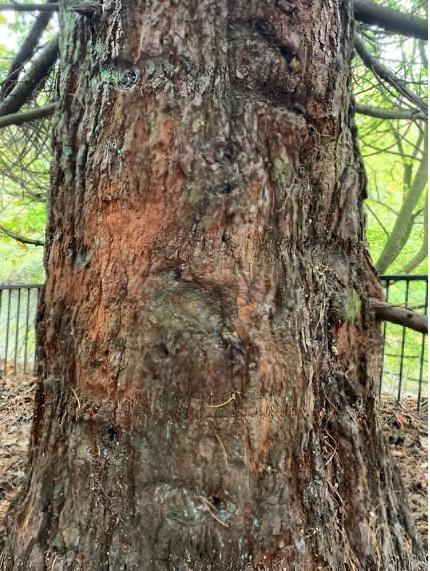
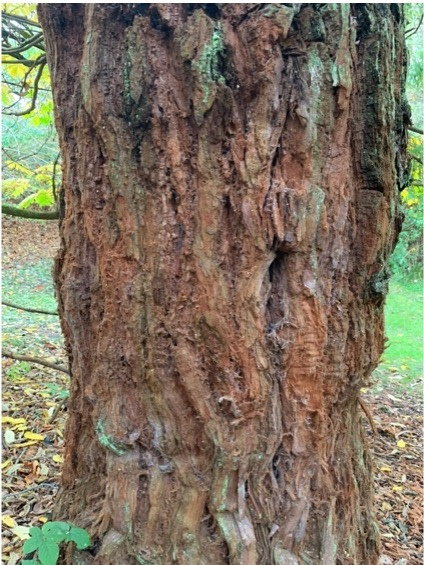
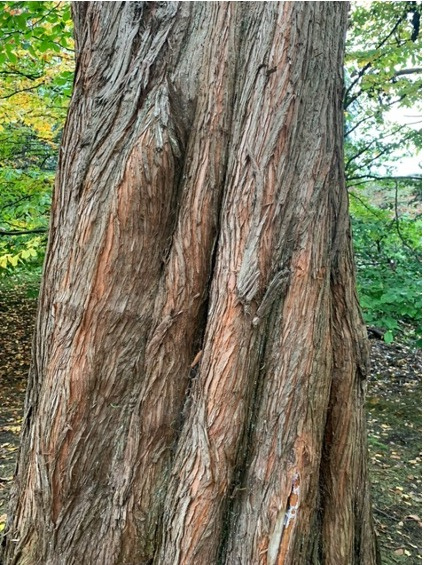
The Dawn Redwood was thought to be extinct – only known to have existed because of the fossil record – until rediscovered and recognised in the 1940s in Lichuan County, Hubei by Chinese botanists. At first it was not recognised as it was winter and the strange tree was bare. Unlike the two other sequoias, this is a deciduous tree. But once documented, there was huge excitement. This discovery of a ‘living fossil’ was called “the greatest discovery of botany in 20th century”. Seeds were sent to botanical gardens around the world.
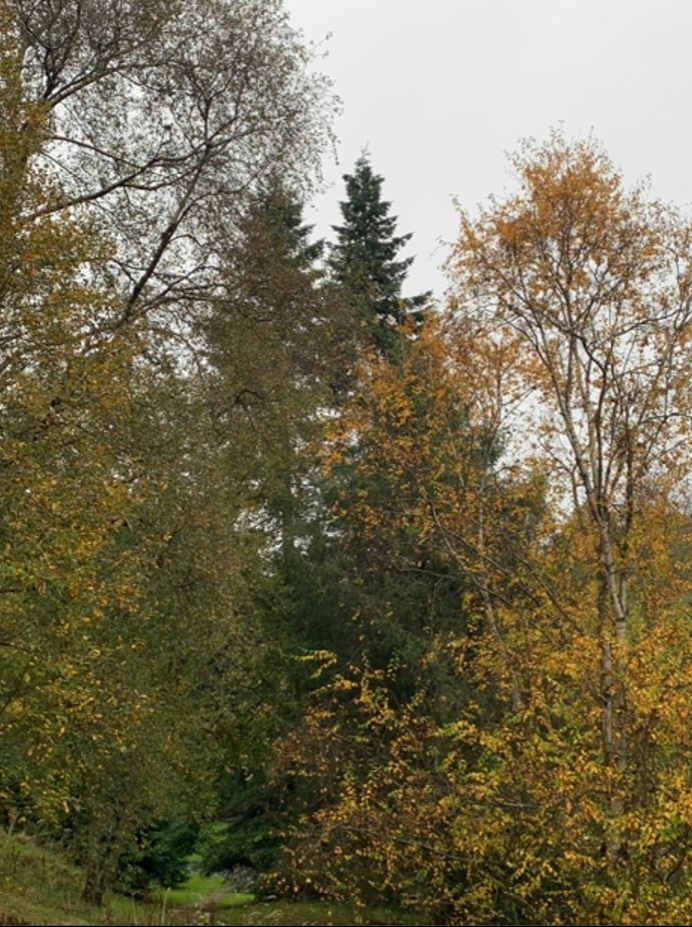
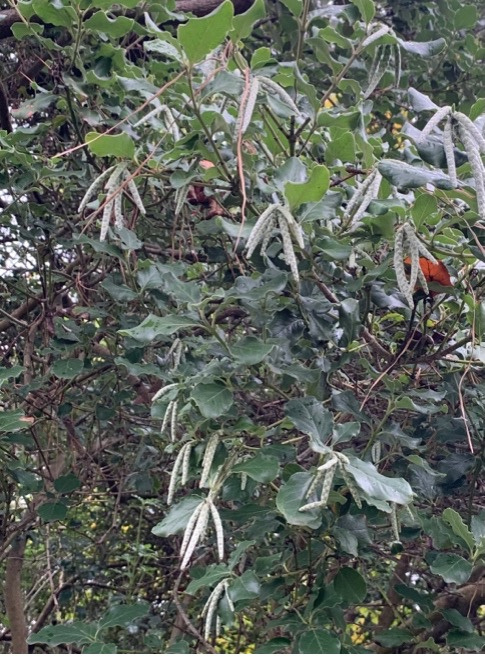
Up on the hill of the Arboretum are trees brought back to the UK by David Douglas, the prolific plant hunter who worked for two years in the Glasgow Botanics in its first location before being sent off to North America by the Royal Horticultural Society: namely a Garrya eliptica with its silky tassels, in evidence as we speak; two tall Grand firs (Abies grandis); a mighty Sitka spruce (Picea sitchensis), a tree which can live to nearly 600 years, and constitutes 43% of Scottish forestry according to Forest Research UK. It has become dominant as it is a successful and resilient tree, though now considered too widespread.
Up on the hill you will also find Hedlundia arranensis, which an interesting backstory. Suffice it to say, it is intriguing how resourceful whitebeams and rowans can be when left to their own devices in a remote glen on Arran.
Go on! Write yourself a prescription and go and see for yourself. What better place than the Arboretum, cool, calm and restoring!