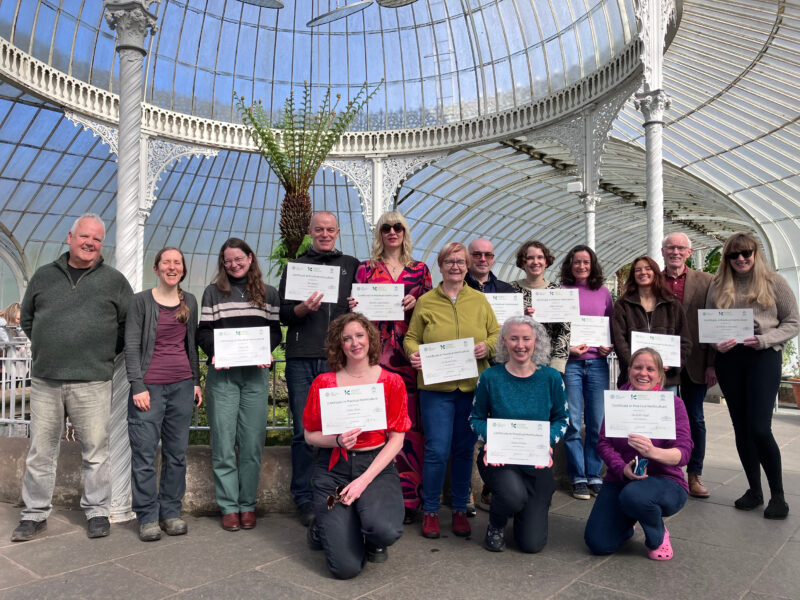
Graduates of Glasgow’s CPH (Certificate in Practical Horticulture) course, have been volunteering in the Gardens again this spring, applying their new skills to small projects and bringing enjoyable improvements to the Gardens.
The 10 day CPH course gives students a grounding in all the core horticultural skills, including seed sowing, vegetative propagation, potting, pruning and planting. Volunteering allows course graduates to practise what they have learned. Often, graduates are keen to help the Gardens after completing the course. For some, volunteering will also be useful if they want to progress into a career in horticulture.
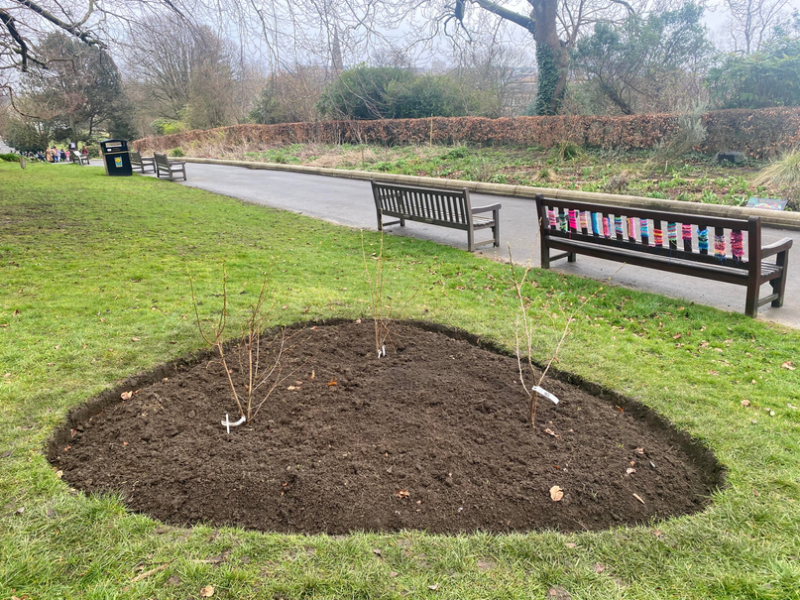
You may have noticed a new bed near the knitted bench, it was created by the volunteers and is now home to three Halesia carolina shrubs.
It is a species native to East USA, including the states of North and South Carolina, hence the name. They have beautiful pendulous white flowers in spring which form into unusual winged fruits as the season progresses. They prefer a sheltered position, so hopefully they will enjoy their new spot in this cosy corner of the Gardens.
Not far away is the Chronological Border, where volunteers have been able to practise pruning, weeding and herbaceous division. This display of garden plants tracks the introduction of different species into horticulture through the centuries. Some plants in here are vigorous, left to their own devices they would take over and overwhelm the others. Volunteers were able to kerb the enthusiasm of Darmera peltata, so that we can still appreciate the bleeding hearts of Dicentra spectabilis. They removed some Solidago graminifolia so the elephant ear leaves of Bergenia crassifolia are no longer overshadowed.
Volunteers also added new plants, Hebe salicifolia from New Zealand, Coreopsis verticillata from East USA and Stachys byzantina from Turkey and Iran. There were also some interesting weeds for volunteers to learn to identify and remove, including enchanter’s nightshade, meadow vetchling, wood avens and bush vetch.
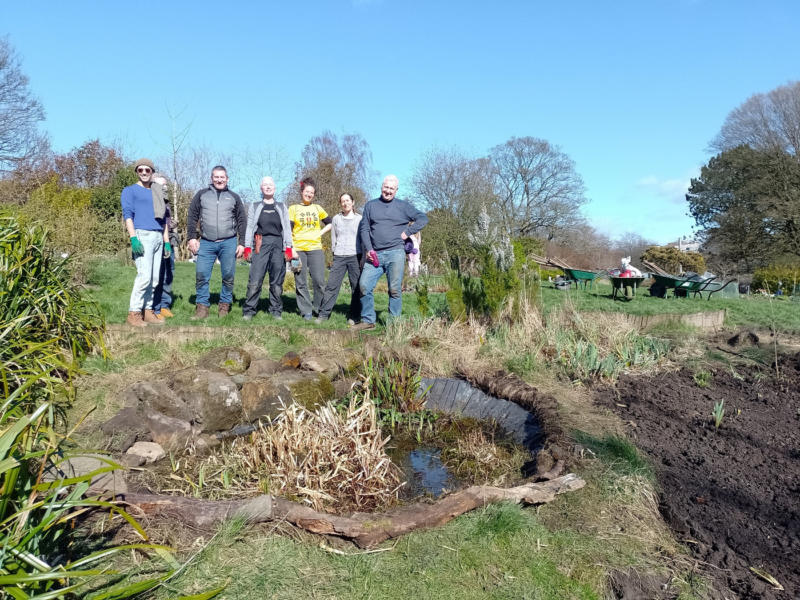
Round the corner you may have seen more changes to the old RSPB COP 26 garden. Storm damage in January left some of the display signage broken, so volunteers removed the remainder of the signs, and tidied up around the pond. Volunteers also got the chance to plant hardwood willow cuttings in the cleared bed. They included cultivars from growers and suppliers, World of Willow, with intriguing names such as ‘Oeil Rouge’, ‘Deep Purple’ and ‘Black Maul’. The varieties include those used in basketmaking as well as for fuel. There is still work to do in the area, but it is on its way to being a bed we can coppice, providing future opportunities to practise pruning skills.
If you were on the CPH teaching plots in May you would have seen a great gathering of bumblebees enjoying the purple flowers of Phacelia tanacetifolia. It is a green manure which volunteers sowed in March and is part of the work to keep the soil in good health. Green manures are usually cut down before flowering, to add organic matter to the soil, but the flowers of this plant are so attractive to people and bees, we just let them bloom. The roots and leaf cover provided by this plant will still help the soil and its structure to recover from the all the digging students have to do during the course.
At the beginning of the growing season, volunteers helped the main herbaceous border get off to a good start by cutting back last year’s dead stems and digging out some of the weeds. This border has problems with some troublesome species, including bindweed and creeping thistle.
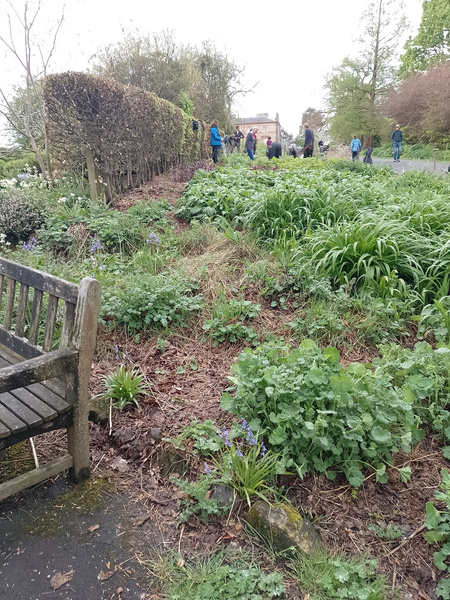
A herbaceous border of this size is a lot of work to maintain and it was a good experience for volunteers to see this. It is something they might encounter if they go on to volunteer or work in other public gardens.
Thanks to the Friends for supporting the volunteer sessions for CPH graduates. And thanks to the volunteers, who brought all their enthusiasm, come rain or shine!