As we have come to expect, Alexandra delivered another brilliant tour!
Even the weather was kind to us and although cold, it was a still, sunny morning when we set off at 09:30. Alexandra explained that we would be listening for three different types of song from the birds, a general song, a song communicating with a partner and alarm calls. Most of us had brought along binoculars but the main objective was to listen!
We did hear (and see in many cases) birds that we were expecting, robins, blackbirds and blue tits. There were several that are usually more difficult to see like the wren. We saw one or two but heard many of these tiny birds.
Another tiny bird we saw was a goldcrest and as we approached the arboretum we heard, then saw long tailed tits.
As we walked, first round the main gardens and then down to the arboretum, Alexandra gave us a lot of useful and important information.
One of these was about feeding birds in a garden. The University of Glasgow looked at nest boxes after nesting had finished and if dead chicks were found in these boxes, they tried to ascertain the cause of death. The results suggested that malnutrition was an important factor. The stomachs of the dead chicks contained fat suet balls. Growing chicks need a richer, protein diet! Meely worms in the spring would be a better option to feed to birds in the spring. The natural diet for chicks of our garden birds is protein rich insects and spiders.
As we reached the bridge at the western end of the arboretum, the star of the day emerged. A sparrowhawk flew over us and landed on a branch.
With binoculars we could see the fluffed-up feathers on the belly of this bird, a female sparrowhawk. She was calling to her mate to bring her some food. Sadly for us (but not the pigeons) he failed to appear.
Alexandra told us that the female sparrowhawk plucks its feathers to encourage this fluffy growth. This was to brood the eggs and young chicks. She demands food from her mate before breeding as he has to prove to her that he can feed her while she is sitting on the nest. Once the chicks are older, he will take a turn on the nest as well!
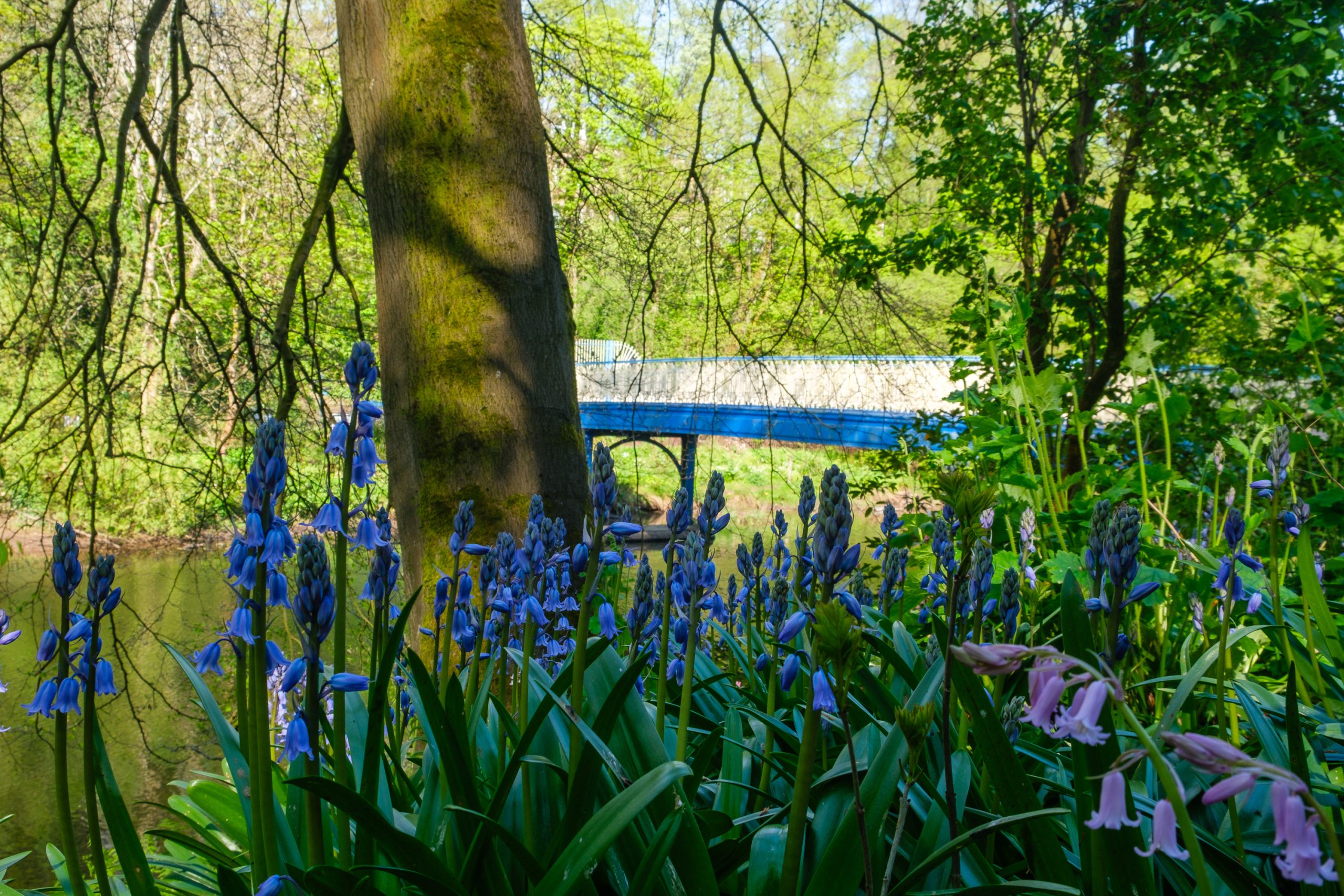
We walked along the north side of the Kelvin. At the humpback bridge we paused, hoping to see otters or kingfishers. All we saw was a single, male mallard with his head tucked firmly under his wing! We headed back up the
steps to the garden.
Some of us took Alexandra up on her offer to see her taxidermy sparrowhawk while others headed to the tearoom for a well-earned, hot drink!