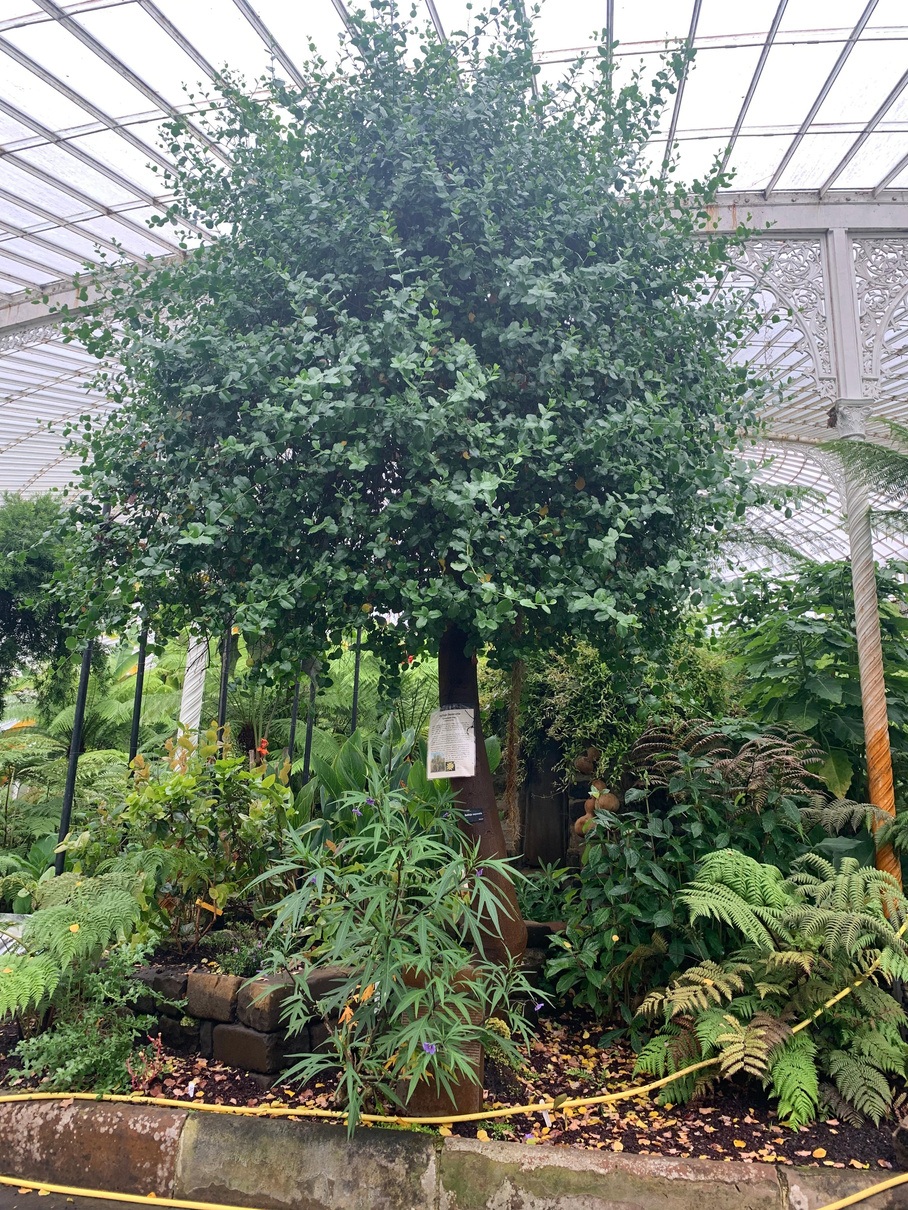
The soapbark tree is native to Chile. It was first described by a Jesuit priest, Juan Ignacio Molina in 1770’s. It is an evergreen tree in the family Quillajaceae. It likes a warm temperate climate and can grow 15-20m in height. The species is drought resistant. It has a thick dark coloured bark, oval, shiny, leathery leaves and white star shaped flowers.
A well-known housekeeping magazine gave a recommendation for cleaning frocks and suits in a 1920’s copy, saying, “stew 1oz soapbark for one hour in water, drain through a stocking, rub over the stain and iron under a damp cloth”. The comment below the advice said “who has a Soapbark tree in their garden? Well, we have one here in the Kibble Palace. It is in the South American Section, do look out for it when you next visit.
The soapbark tree has a variety of uses. The wood can be used for furniture. The scents derived from the tree are used in cosmetics. In the Andes it has been used for centuries by the Andean people for medicinal purposes, particularly for chest problems. But the most recent use has been in some Covid-19 vaccines, for example Novavax, shingles, malaria. The saponins from the tree have adjuvant properties for vaccines and enhances the effectiveness.
Saponins are a group of bitter tasting compounds that produce a soap-like foam when shaken. (Latin sapo = soap) So the inner bark is dried, powdered and used as a foaming agent in commercial products. The saponins in Quillija Extract are also used as an active ingredient in commercial pesticides to inhibit the growth of pathogenic fungi and nematodes in ornamental plants and food crops.
What a lot there is to think about when you next visit the Kibble Palace specimen.