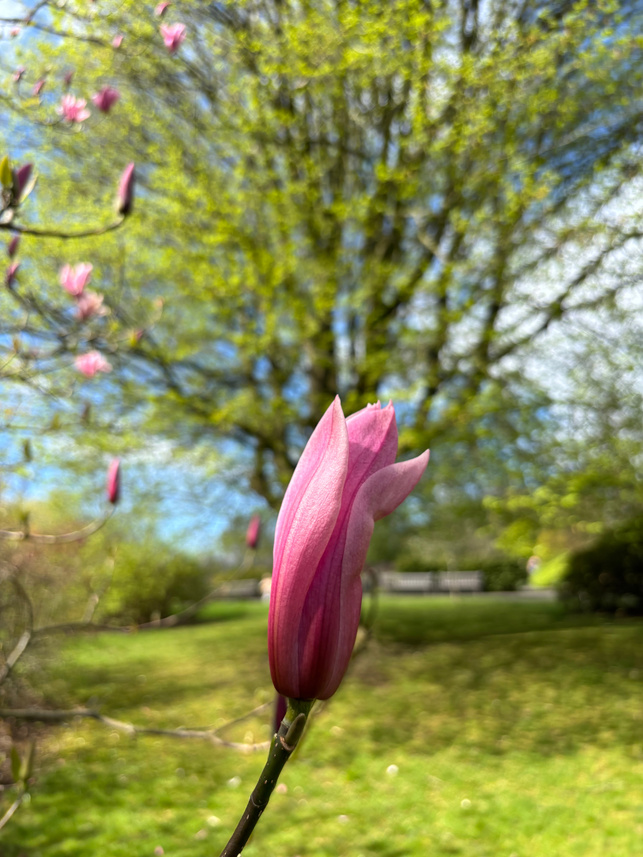
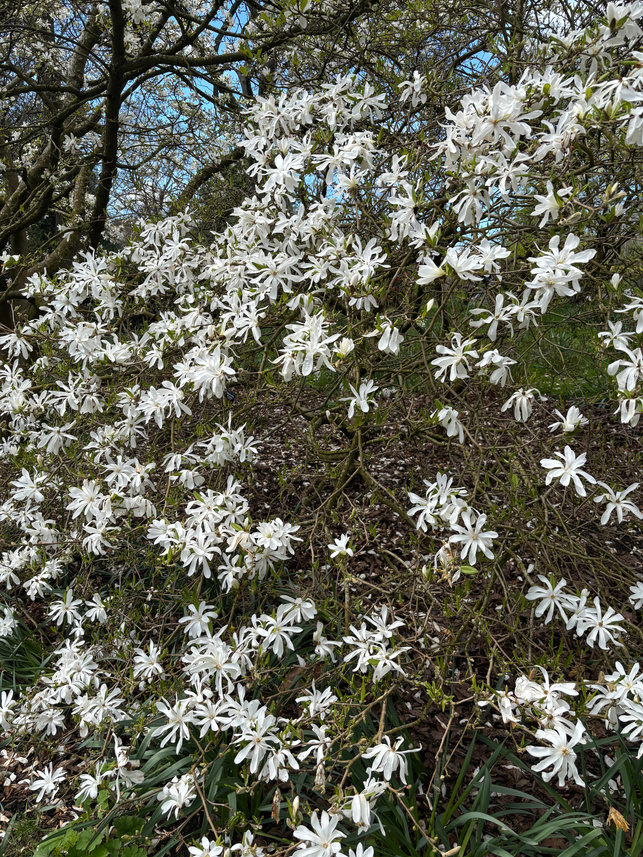
The gardens are full of wonderful Magnolia blossoms just now. Magnolias are named in honour of the French botanist Pierre Magnol, professor of botany at Montpellier University in the late 17th century. He was the first person to suggest that plants with similar characters could be grouped together into families.
Magnolias are native to China and the south-east of the USA although the fossil record indicates a more widespread distribution in the past. They have a long fossil history, stretching back around 95 million years to the Cretaceous period. This long history means that they aren’t generally bee-pollinated like many other flowering plants, as there were few bees around when they first evolved, so they are pollinated by beetles.
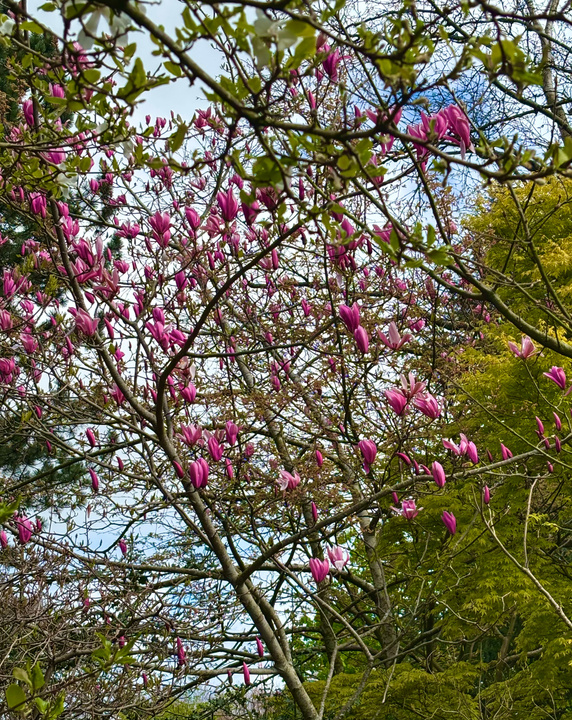
They often have silvery bark and hairy flower buds. Beetles are rather clumsy insects and visit magnolias primarily to feast on their protein rich pollen, so the female parts of the flower (the carpels) are tough, to avoid being damaged by the beetles’ mandibles.
The magnolia must produce an abundance of pollen to ensure that some is left over for pollination. Beetles don’t have any specialised adaptations for collecting pollen, the pollen grain just stick to their bodies as they move around.
In order to avoid being self pollinated, magnolias open in the morning, allowing foraging beetles covered in pollen to visit while the female parts are receptive. In the evening, the flower is closed up, trapping the beetle which deposits it’s pollen load. The male anthers then mature, releasing fresh pollen over the beetle. The following morning the flower opens again allowing the beetle to escape and visit a different flower, completing the cycle of cross pollination.
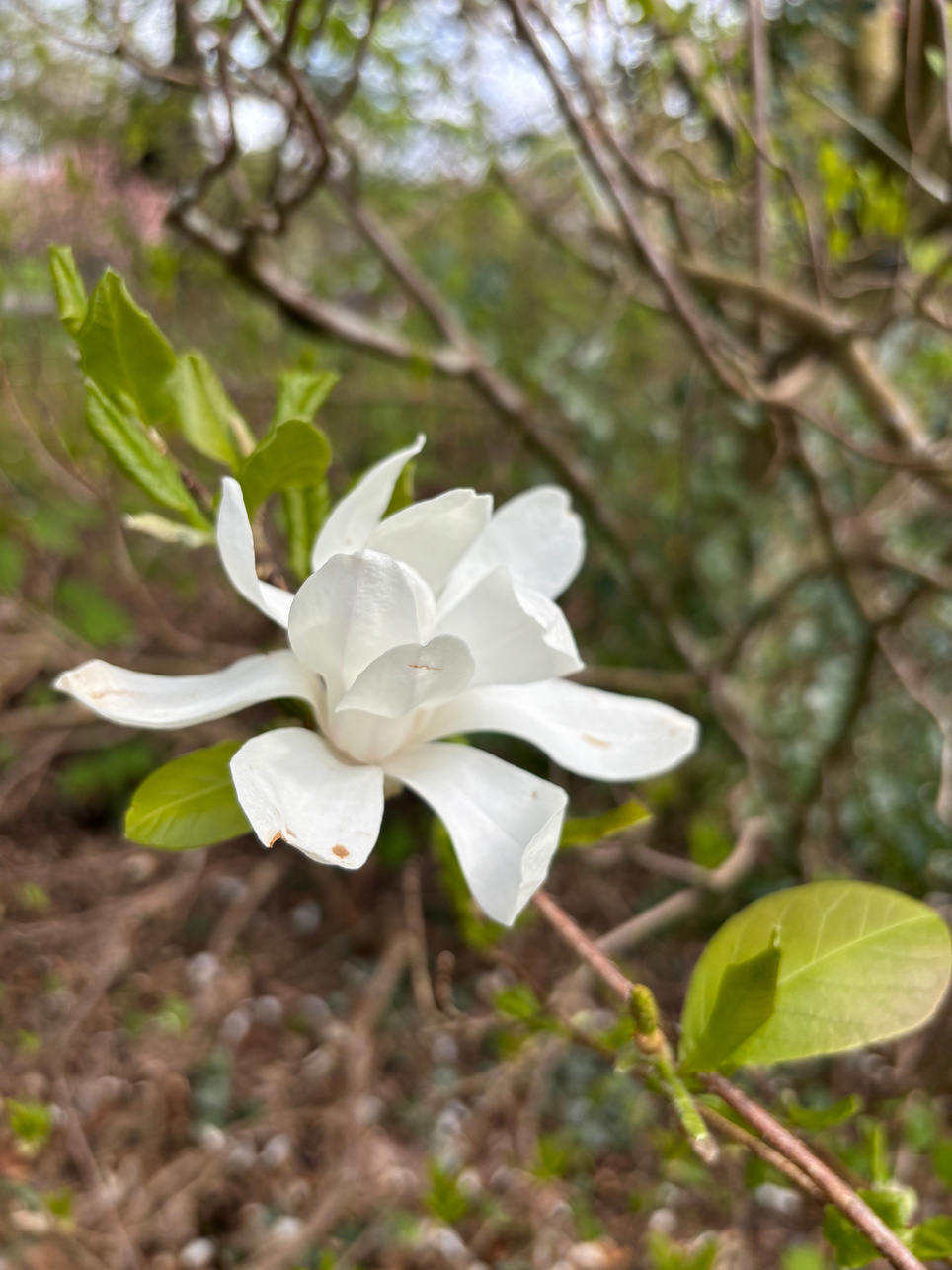
Plants that are beetle-pollinated are often have open cup shaped flowers which are white or pink, produce abundant pollen and are scented but lack nectar. Although beetles have colour vision, they are primarily attracted by scent.
It may be that in Britain many magnolias bloom while the weather is still quite cold, before beetles are active, so few seeds are set. They can be evergreen or deciduous, with the flowers appearing before the leaves in deciduous species.
Magnolias belong in the family Magnoliaceae. Another member of this family is the tulip tree, Liriodendron tulipifera, which grows in the gardens and the arboretum. It also has open, cup shape flowers and is beetle pollinated,
although flowering a little later in the spring.